City Guide
Munich insider tips: Explore ‘Minga’ from Maxvorstadt
Consider us your personal guide. Our Munich insider tips should turn your stay in our city into an unforgettable experience. The great thing about a holiday in Munich is that you’re not forced to choose between city, countryside, river adventures or thermal baths – you can have it all, or indeed a combination. What matters is that you take away memories that you will treasure for a long time. We’ll be happy to help you with that. Here are some suggestions:
ABC – Alte Börse Club: Sexy nights …
€€€
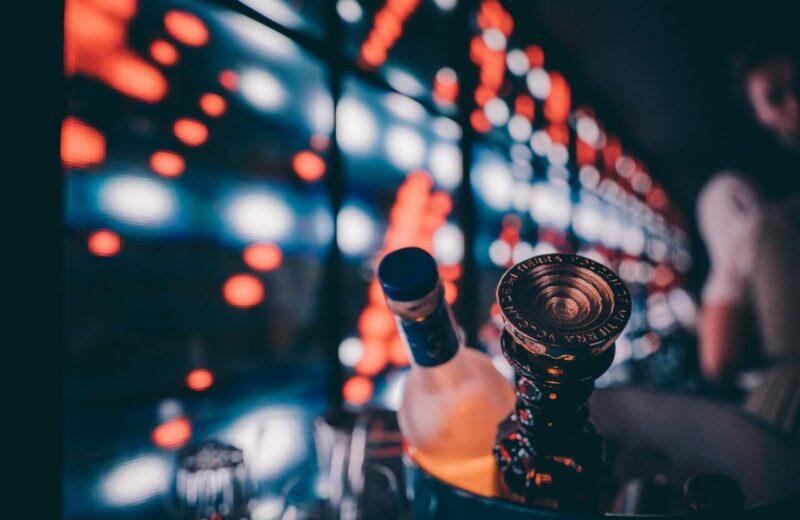
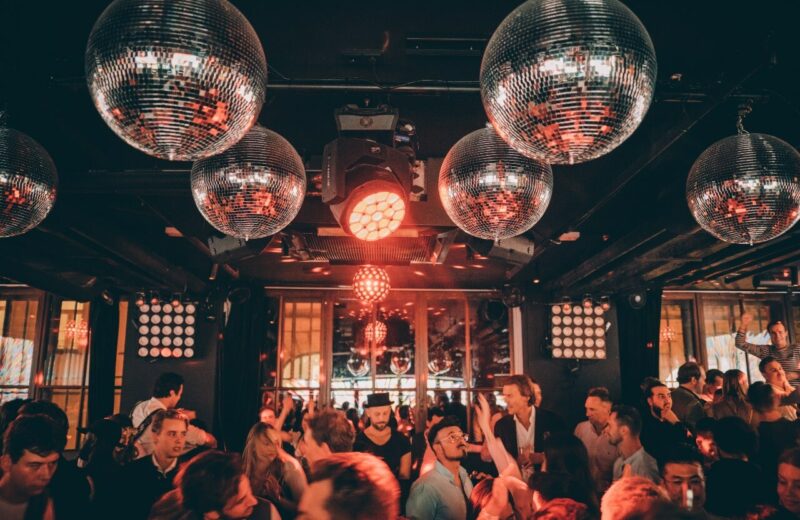
Visitors to the Alte Börse Club on Lenbachplatz get four experiences for the price of one. Or rather five, because even the entrance to the magnificent former bank and later stock exchange building from the 19th century makes quite an impression.
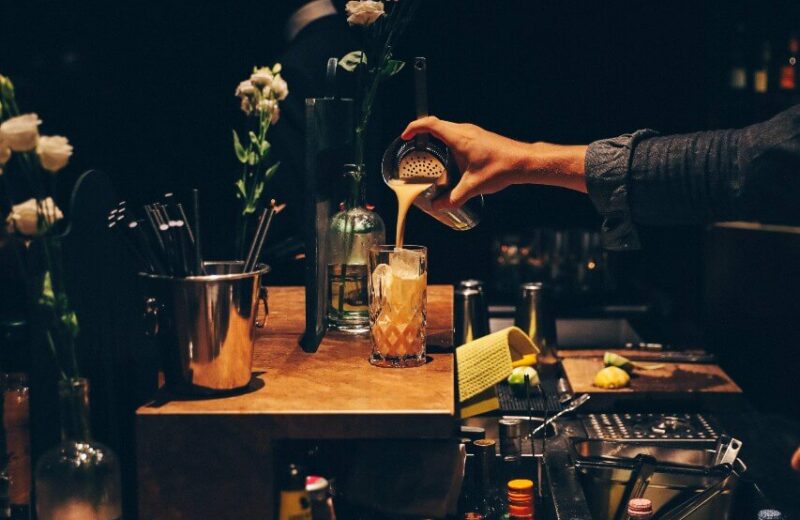
The ABC extends over several floors and rooms. If you want to party the night away, you have the choice between club and bar. The club plays a mix of electro, house, Nu Disco, 80s and 90s music. The Circle Bar drinks repertoire revolves around liqueurs, craft cocktails and champagne served up in a truly classy setting. The motto of the ABC is “Make Munich sexy again”, and that’s what dictates the dress code. The Sépareé and the Kitchen, an à la carte restaurant, can be booked exclusively. Maybe you have a special occasion in mind?
Read more
089 Bar: A bit of fun never goes amiss
€€
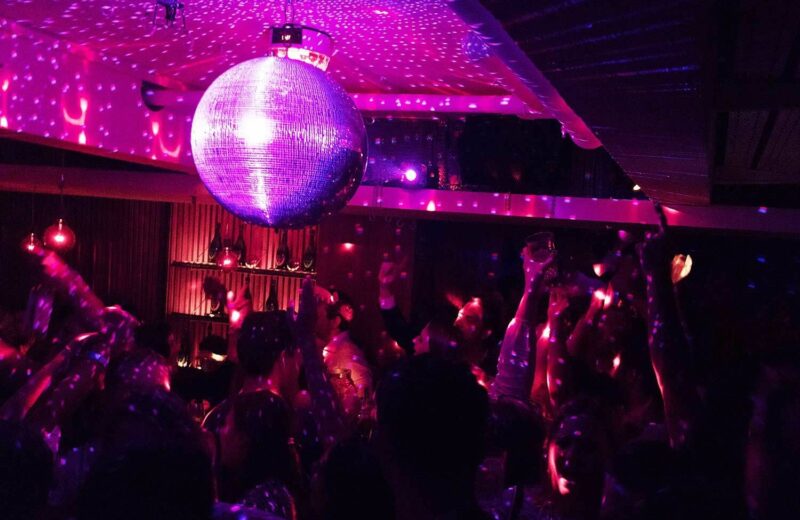
That’s right, 089 is the area code for Munich. Dial 089 to turn night into day! The ‘Bar’ designation is somewhat misleading, however, because the establishment on Maximiliansplatz, right next to Pacha, is a nightclub in the literal sense of the word.
You can get drinks there, but above all else, it’s a party venue! What do they play? Mainstream, but also hip hop, electro and rock. A good mix so that all your companions – even those with different musical tastes – soon get into the party mood. The owners like to come up with different themes, such as Music Bingo, Schnapps & Love and ‘A bisserl was geht immer’ named after the popular folk-pop hit. The party is held every day except Sunday, so chances are you’ll be in Munich on just the right day.
Read more
Pacha: A little bit of Ibiza in Munich
€€€
The two-cherries logo of Pacha is instantly recognisable, but what does it stand for? Pacha is synonymous with party time, and has been since 1973, when club founder and dance scene pioneer Ricardo Urgell opened the first Pacha in Ibiza.
Munich eventually followed suit in 2000. The concept is universal: party nights with international DJs, event series and specials. The playlist ranges from urban sounds to electronic music and feel-good house music. And to make you feel really good on your Munich holiday, Pacha offers various VIP table options: in one of the exclusive areas in the club, in the Winter Garden or on the terrace. The ‘Very Important Person’ package includes exclusive service, priority admission, space to celebrate and reserved seating.
Read more

Therme Erding: Wellness temple in the former seat of the Dukes of Bavaria
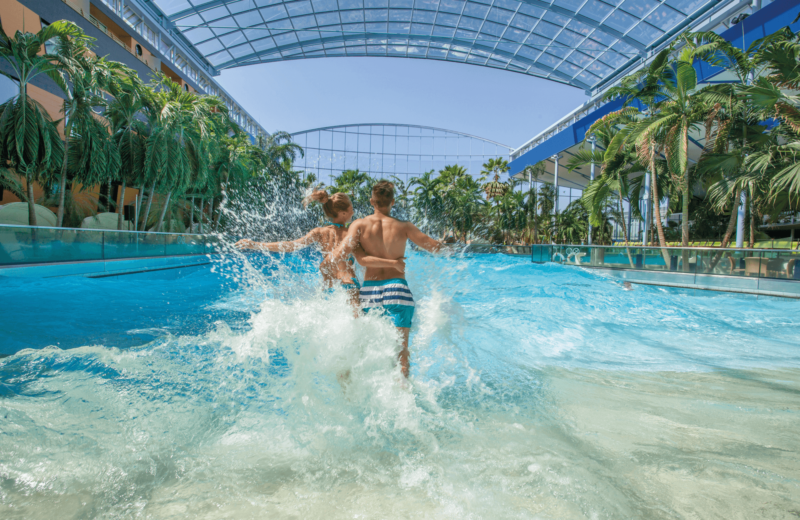
Therme Erding is the largest thermal spa in the world. It almost feels like you’re entering a parallel universe or, judging by the unvarying summer temperatures, at least stepping into tropical climes.
Oder wie in tropischen Gefilden, denn sommerliche Temperaturen, Südseepalmen, türkisfarbenes Wasser und leckere Cocktails im Pool gehören ebenfalls zu den außergewöhnlichen Features dieses Familien- und Erlebnisbads. Apropos Erlebnis, hier ein paar schwindelerregende Zahlen: Die Anlage im Nordosten Münchens, rund 36 Kilometer vom Zentrum entfernt, verfügt über 2700 Rutschenmeter, 27 Wasserrutschen mit drei verschiedenen Schwierigkeitsleveln, ein Wellenbad, einen Crazy River, eine VitalOase und VitalTherme mit Thermalheilbaden und 24 Saunen. Und weil Wasser grundsätzlich hungrig macht, gibt es auch ein kulinarisches Angebot, das von Bayern über Italien bis nach Asien führt.
Read more
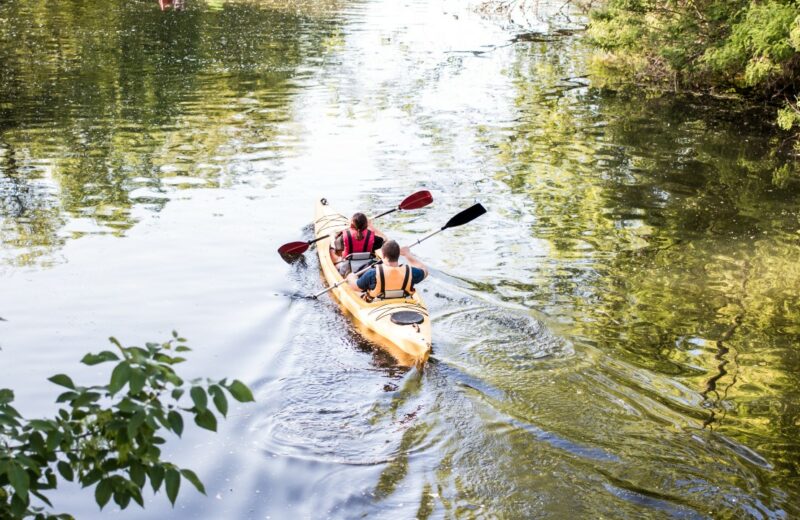
Waldmeister canoe tours: In touch with nature
The Waldmeister team spend most of the summer on the water, organising canoe excursions for tourists mainly on the rivers Amper and Isar.
The range of tours on offer shows that canoeists experience nature in very different ways: in addition to the sundowner and beaver safari tours, moonlight outings are a real adventure offering a welcome change of perspective. Depending on the tour, you will see romantic river meadows, wide open lakes, swirling currents, lively rapids and even feel the occasional waves from an excursion steamer. To fit in nicely with our couples package, the Waldmeister programme includes a romantic paddling day for two. Visitors to Munich with prior experience and skills can hire an inflatable canoe for their own private use.
Read more
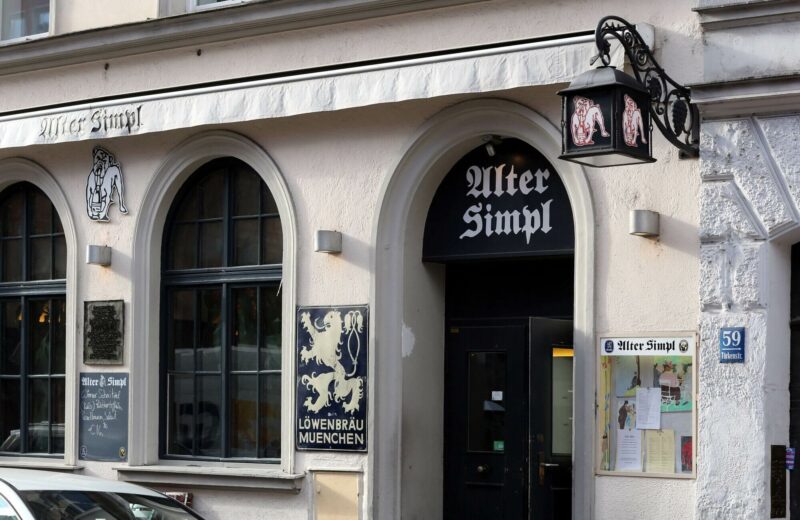
University Quarter: Pub crawl for all
Apparently, students don’t just sit reading their books, but also go out and socialise from time to time. The best destinations are obviously close to the university.
So it’s no surprise that the university quarter (which also happens to be in Maxvorstadt, just like the elaya hotel munich) has an especially high density of bars catering for every taste in drinks. The best-known bars include the Fox, which manages to look run-down and stylish at the same time, the Ginkgo with its selection of highballs and newly interpreted classic cocktails, and the ‘Don’t call Mama’ with consistently good drinks and a rota of live DJs. In the summer, the socialising shifts to the tables on the pavements and even in front of the Academy of Fine Arts, where they serve a mean Aperol Spritz.
Read more
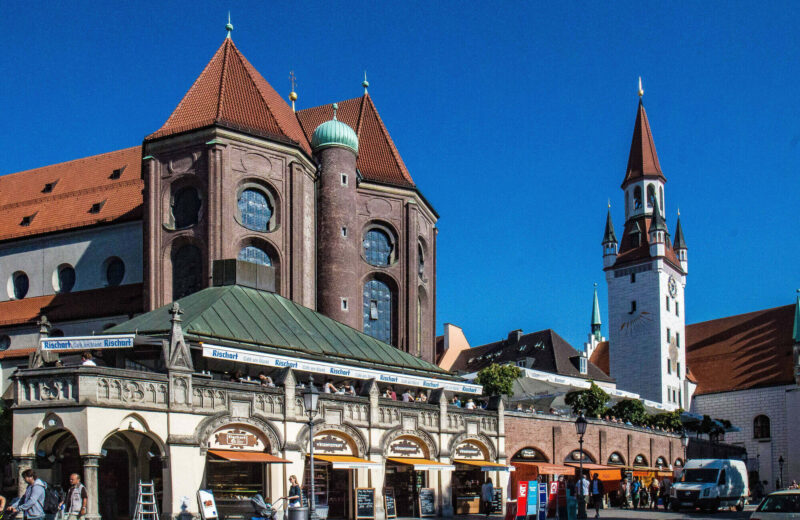
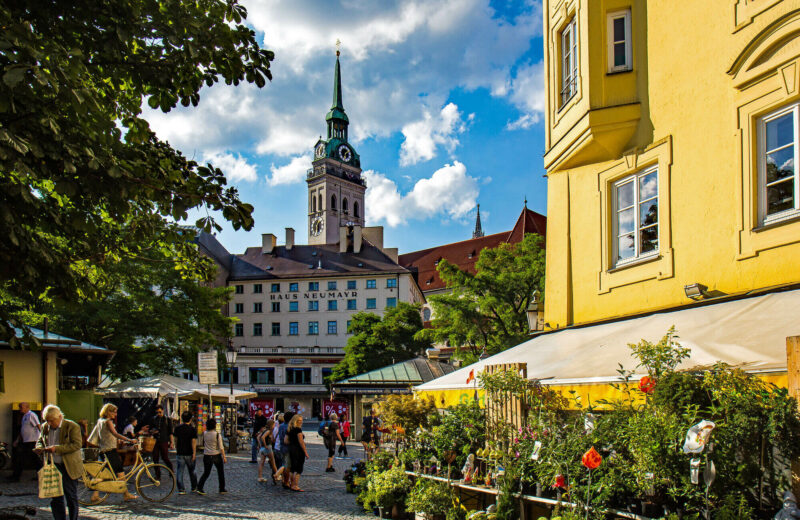
Viktualienmarkt: Where Bavarian produce and comedians are at home
The former farmers’ and herb market in the heart of Munich’s old town reached its present size around 1890.
Ranging from traditional Bavarian fayre to exotic fruits, the ‘victuals’ prove an irresistible temptation to sample over-the-counter culinary delights. Until the beginning of the 19th century, the market was still held on Marienplatz, but nowadays it is impossible to imagine any location other than the current one with its familiar landmarks. A popular rendezvous is the Maypole, which was erected by the Munich breweries in 1962. Other eye-catching features are the fountains topped by statues immortalising famous Munich characters from the past, among them the comedian duo of Karl Valentin and Liesl Karlstadt. If you want to see the Viktualienmarkt at its liveliest, Saturday is a good day to visit.
Read more
Gärtnerplatz and Glockenbach district: Flowers, bars and good companionship
In 1860, Gärtnerplatz was laid out as the focal point of the Isarvorstadt district. In the centre of the large traffic island is an ornamental fountain. The square is named after the eminent architect Friedrich von Gärtner, whose design masterpieces include the Ludwig Maximilian University, the Ludwig Church and the Munich Siegestor.
The assumption that the name derives from the verdant public space around which the traffic flows would not be wide of the mark either because, from spring onwards, it is beautifully planted and tended. Among the buildings located on the square are the Gärtnerplatz Theatre, cafés and shops, a biscuit manufactory and a small bookshop. And the streets radiating off towards the Isar and Viktualienmarkt are also worth exploring. The square and district have a vibrant atmosphere in the evening when the night owls come out.
Read more
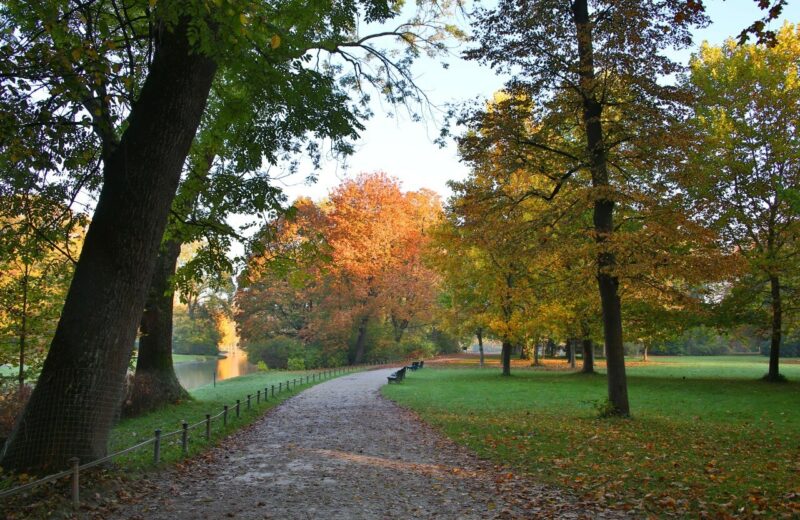
Connoisseurs' delight
La Bohème: Open kitchen, because food should delight the eye as well as the palate
€€€
We like La Bohème because it shares our penchant for garish colours. It also comes recommended by the Michelin Guide.
The steakhouse at Schwabinger Tor is not only open for exquisite cuts of beef – twelve in all, from Germany to Japan – but also for scrutiny of the kitchen: the inner workings can be observed through a large window in the dining area. In addition to steak specialities, the dishes prepared in this open kitchen include starters such as tartare and beef tonnato (sharing is caring, and looks great on the slate plates), oyster variations, crêpes suzettes, fish platters and vegetarian options, for example tagliatelle with fresh black truffle. When it’s time to order the semi-liquid chocolate cake, unanimity will once again prevail around the table.
Read more
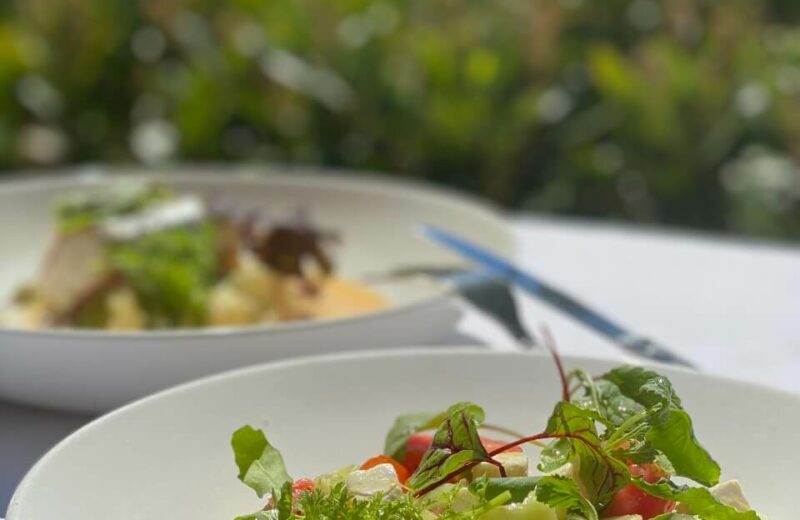
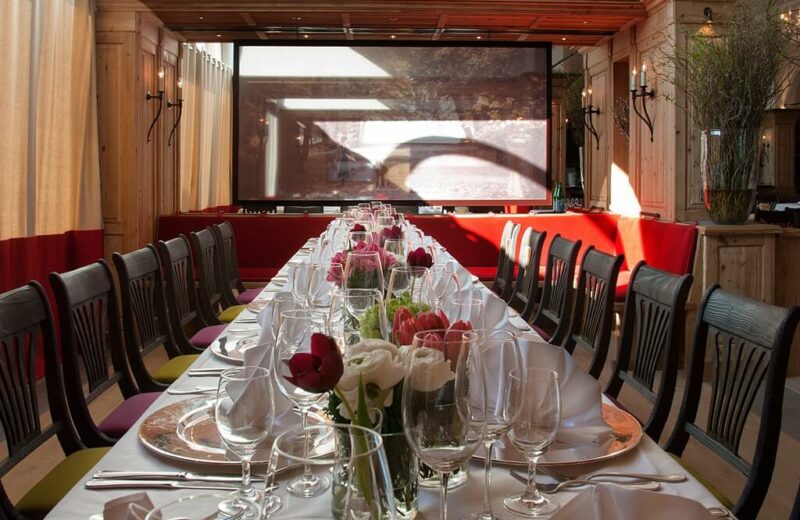
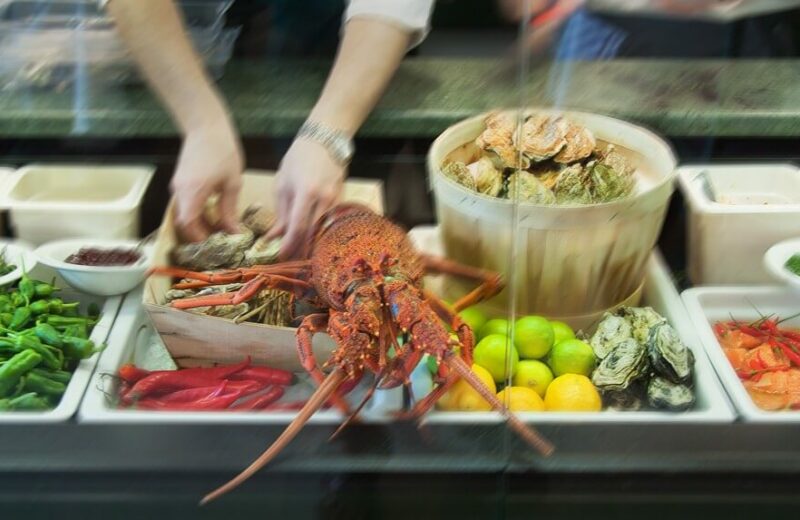
Seehaus: Gemütlichkeit Bavarian style
€€€
With its prime location in the inner-city English Garden, Seehaus has become something of an institution.
The restaurant with its beer garden could not be in a more picturesque setting, looking out onto the Kleinhesseloher See, an artificial lake created in 1803. It is the perfect photo/Instagram motif at any time of the year. There was already a beer stall and a small inn here around the year 1800. Following various modification and extension projects in the intervening years, the building in its present form has stood on this spot since 1985. But the idyllic location is not the only attraction: the restaurant and terrace also offer first-class cuisine. To experience Bavarian Gemülichkeit at its most authentic, however, you should visit the beer garden very early or very late in the evening. In summer, the Seehaus is the place to see and be seen.
Read more
Allianz Arena: Bend it like …
Impressive from every angle. The Allianz Arena with its 75,024 seats was only opened in 2005, but it has already established itself as a landmark in the state capital.
Visitors being driven from or to the airport can’t help but notice the imposing bowl-like structure in Munich-Fröttmaning, designed by architects Jacques Herzog and Pierre de Meuron. The visual effect is especially stunning in the evening, when the football stadium is lit up in red for FC Bayern Munich home games or in white for international matches. But colour is also used to make socially important statements, for example purple to commemorate the International Day of Remembrance for the Victims of the Holocaust. The Allianz Arena is also open to the public as a component of a guided tour, except on match and event days.
Read more
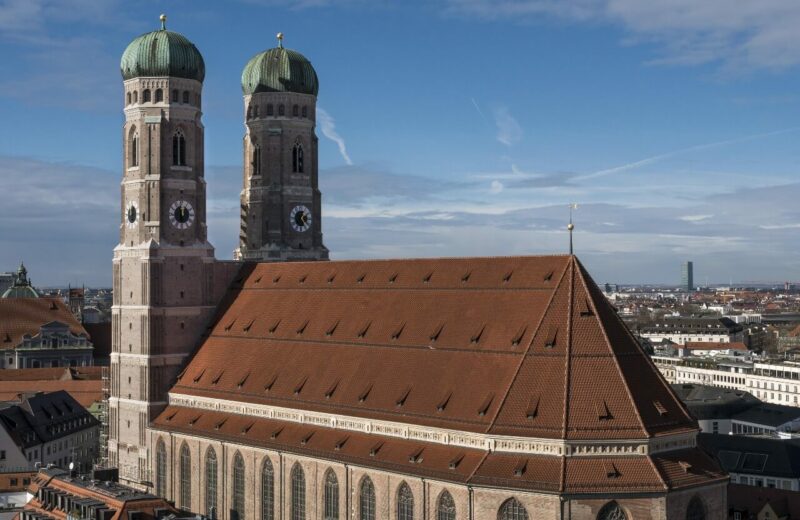
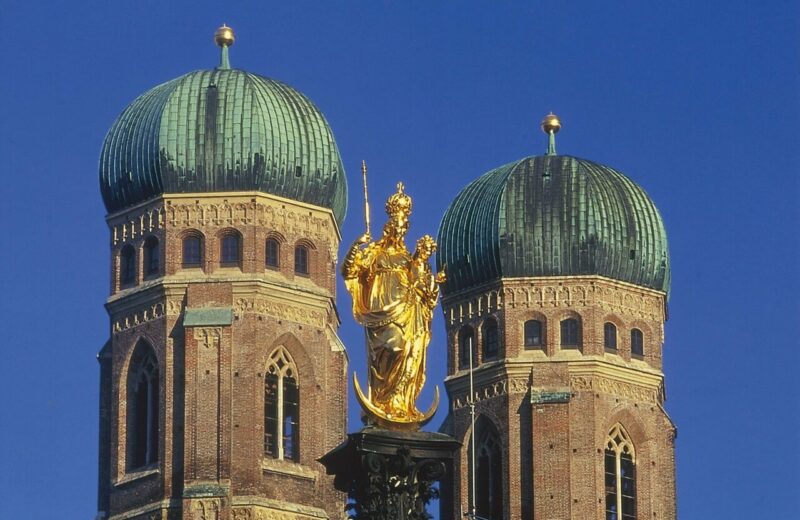
Frauenkirche: The measure of all things
The Frauenkirche (official name: Dom zu Unserer Lieben Frau – Cathedral of Our Lady) is one of Munich’s most famous landmarks, not least because of its two prominent onion domes.
The fact that they are visible from afar and not obscured by surrounding buildings is the result of restrictions imposed by the city administration: in the city centre (i.e. within the Mittlerer Ring), no structure may exceed a height of 100 metres. And this regulation is currently still in force outside the city area as well. The north tower rises to a height of 98.57 metres, while the south tower measures 98.54 metres. The 109-metre-long, three-nave brick building was consecrated in 1494. When you visit the Frauenkirche, pay special attention to the floor: set into a square slab is the legendary Devil’s Footprint. We will only reveal this much: the devil rejoiced too soon…
Read more
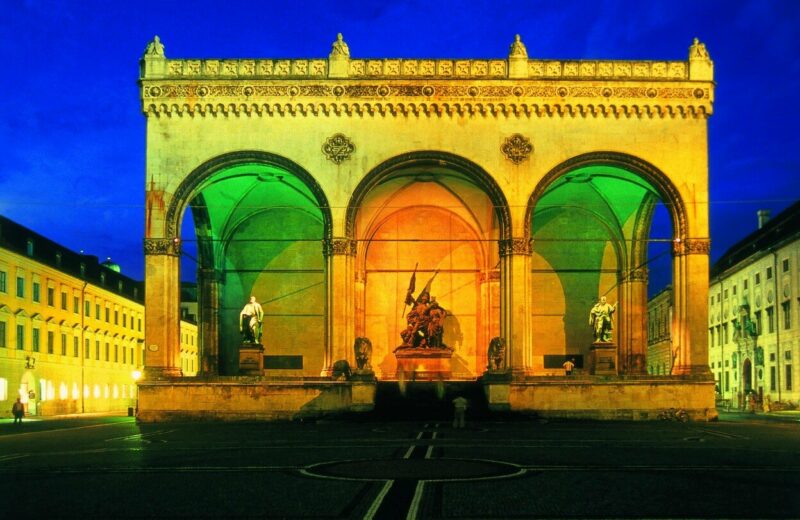
Feldherrnhalle and surroundings: An imposing monument flanked by lions
The Feldherrnhalle on Odeonsplatz also bears the signature of the architect Friedrich von Gärtner. Between 1841 and 1844, he oversaw the construction of this monument commissioned by King Ludwig I.
If it looks vaguely familiar, that’s because the Loggia dei Lanzi in Florence served as a model. It was built to honour the Bavarian army and as the southern entrance to Ludwigsstrasse, forming a harmonious link between the historic Old Town and the majestic new boulevard. Two marble lions have stood guard on either side of the steps since 1906. The sculptor Wilhelm von Rümann modelled them on a lion named Bubi, a resident of Munich’s zoo. The Feldherrnhalle forms part of an ensemble together with the Theatinerkirche, the Residenz and the Hofgarten. From here, it is a brisk walk to the upmarket shoppers’ paradise of Theatinerstrasse and Maximilianstrasse.
Read more